Seattle artist, art critic, author, and co-founder of the Gage Academy of Fine Art Gary Faigin passed away on September 6, 2025.
Gary Faigin, co-founder of Seattle’s Gage Academy of Art, dies at 74 (The Seattle Times Sep. 18, 2025)
Gary regularly shared commentaries about local art on KUOW while I was a host and producer there. Whenever I interviewed him, I appreciated his frank, enthusiastic, sometimes visceral reactions to the art he saw. His style was a contrast to highly academic, ‘inside baseball’ art reviews. Gary reminded me more of an amusement park aficionado recounting his latest roller coaster ride. He encouraged imaginative engagement with art, instead of technical evaluation.
In 2013, a few months after I started working as an independent consultant, Gary and I worked on a few pilot episodes of an art podcast. I called it “Off the Pedestal” because, to me, Gary’s approach to art tossed aside the velvet rope of classical art criticism to offer a perspective that was approachable, made me laugh, and gave me permission to bring art down to my level.
The podcast didn’t transition into a full show, but I still have a couple artifacts from our collaboration.
COOL WITH A CAPITAL “C”: A review of a Trimpin exhibit that showcases Gary’s enthusiasm and ability to make the verbal visual. The mp3 below is the full podcast conversation. The YouTube video is a promotional slideshow, pairing selected Gary quotes with images.
REMBRANDT’S SELFIE: A HUMBLEBRAG PORTRAIT: An examination of the fine art history of the ‘selfie’. Gary shares how Portraiture was big business during the Dutch Golden Age. Then he connects how he approaches self-portrait in his work, and finally offers some advice for modern-day selfie takers. There is a shorter mp3 at the top of the story and a full “art lovers’ edit at the bottom of this post.
Cool with a Capital “C”: The Sound Art of Seattle’s Trimpin
ORIGINALLY PUBLISHED FEBRUARY 2013
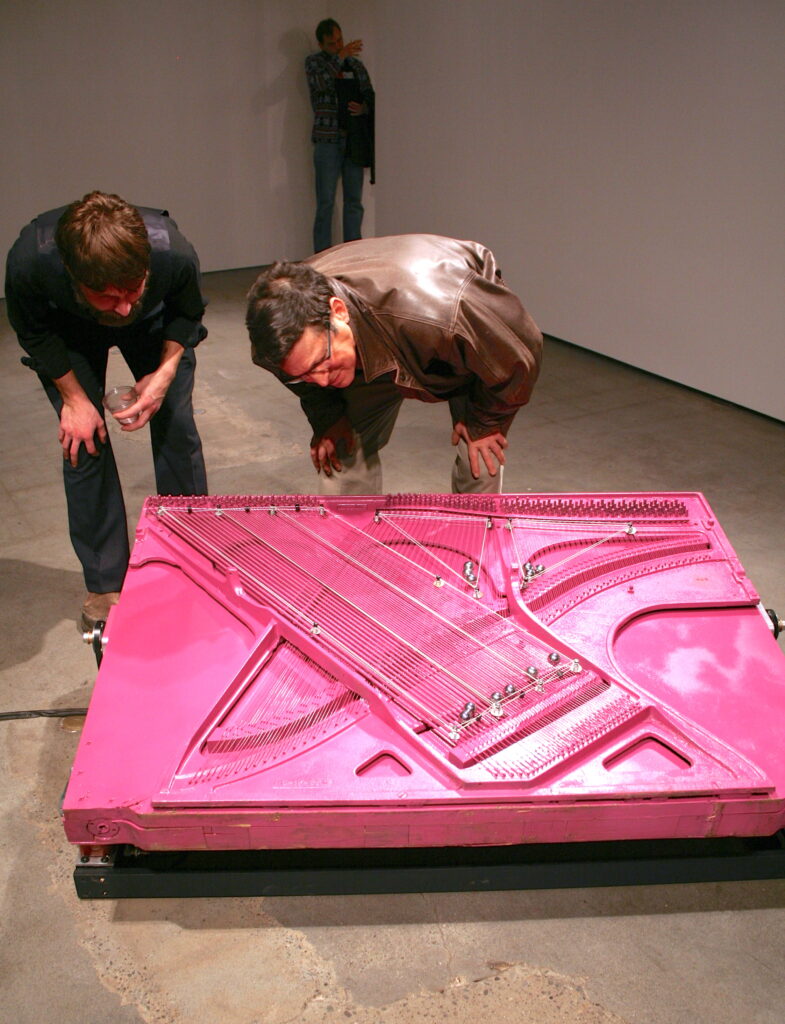
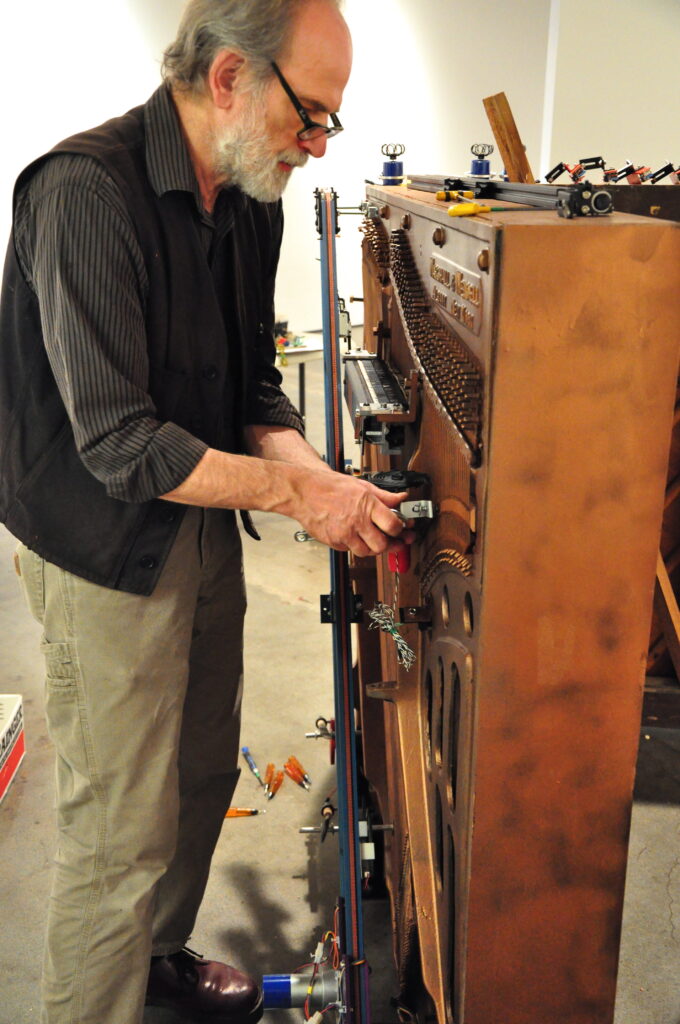
Take the guts of two pianos, a pile of old junk, some electromagnets and wi-fi and you’re halfway to creating a player piano in the style of Seattle artist, Trimpin.
Gary Faigin is a Seattle artist, art critic and co-founder of the Gage Academy Art. He takes Megan Sukys on an exploration of his hair-raising experience at Trimpin’s first-ever gallery show, “Klavier-Stücke”.
Photo by Anna Sparks; Winston Wachter Fine Art
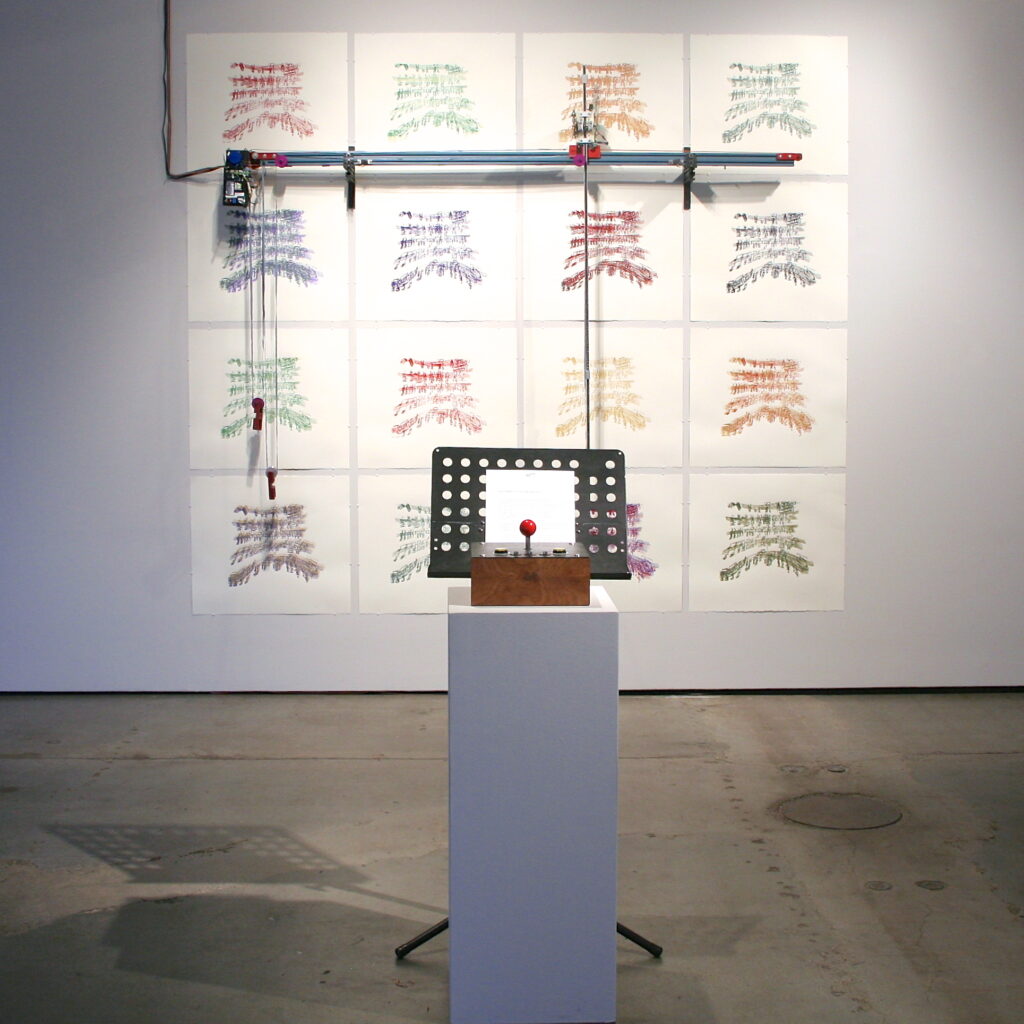
In the Distance Installation
(SOLD)
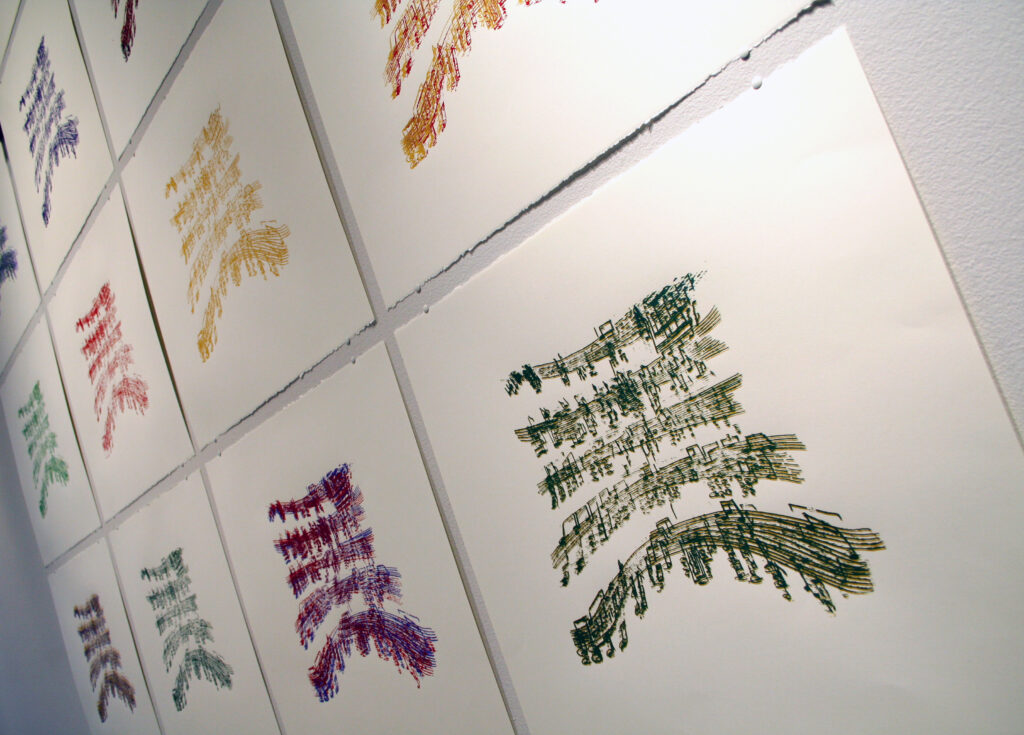
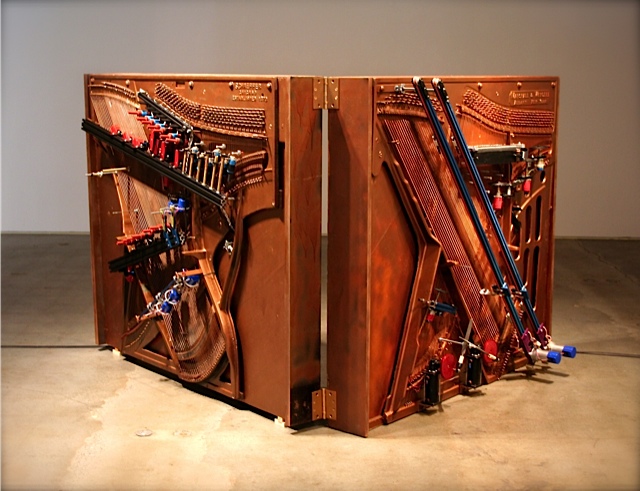
Klavier Stucke
Piano, preparations, robotic devices, electronics, 63 x 54 x 36 inches
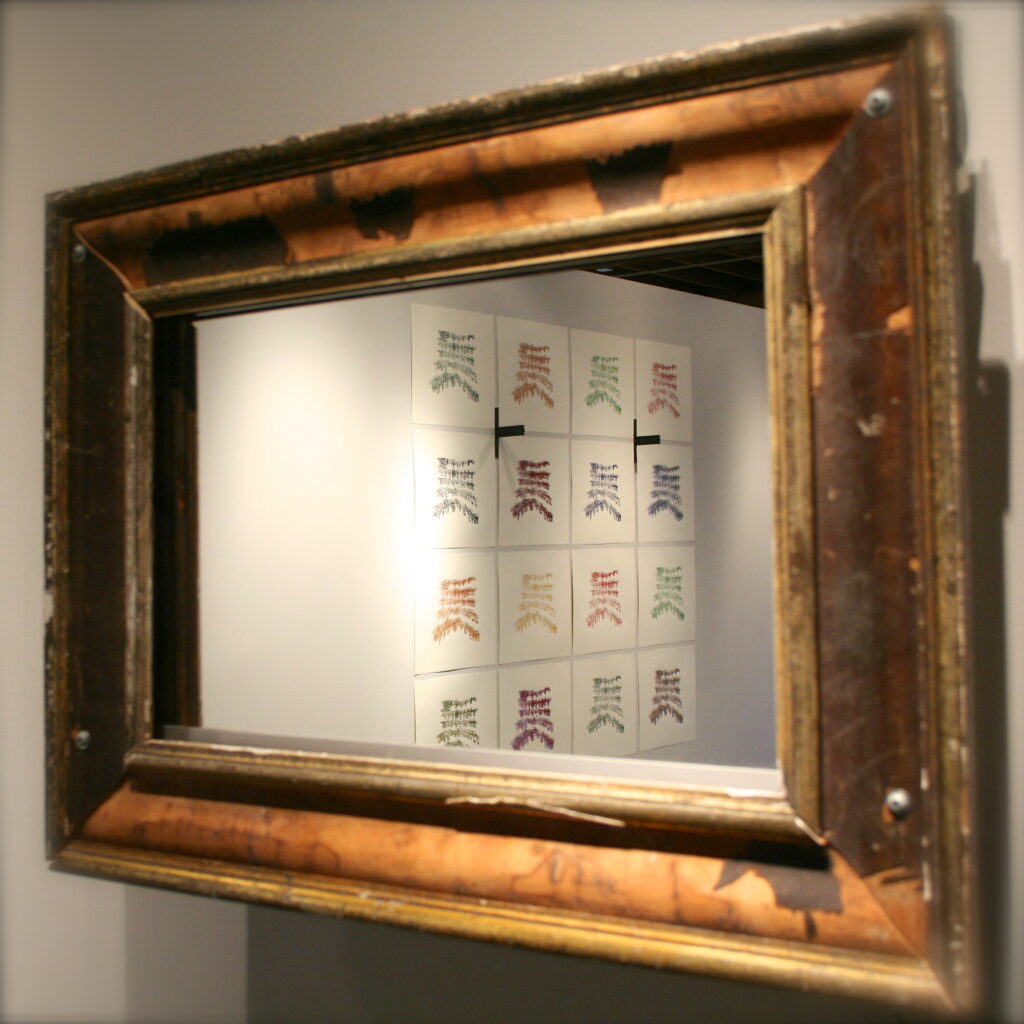
Absit Invidia, no offense intended
2012-13
wood, glass, electronics, 23 x 31 inches (SOLD)
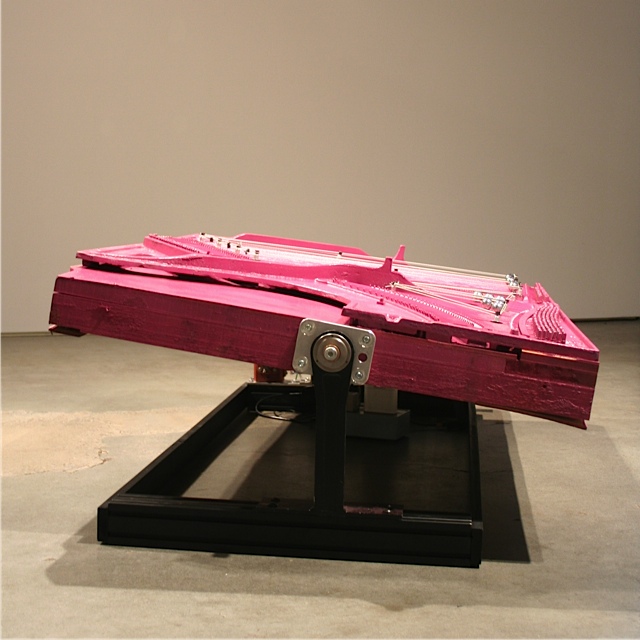
The Rocker
2013
Piano, electronics, metal balls, 38 x 55 x 14 inches
Rembrandt’s Selfie: A Humblebrag Portrait
ORIGINALLY PUBLISHED MARCH 25, 2013
Gary Faigin explores the Rembrandt connection to the modern-day ‘selfie’ and the story portraits aim to tell.
Portraits used to be a mark of class. You could only get an artist to paint your likeness if you had enough money or social stature.
These days, though, it’s no problem. You just grab your phone and snap a “selfie”.

But, the “selfie” has a lot of haters. People point to them as examples of our runaway narcissism.
And yet, the self-portrait is a pillar of fine art. So, what’s the difference between a self-indulgent “selfie” and a self-portrait worthy of generations?
I turned to Gary Faigin with that question. He’s an artist, an art critic and co-founder of Seattle’s Gage Academy of Art.
He pointed me in the direction of this self-portrait from Rembrandt, created just four years before his death, around 1665.
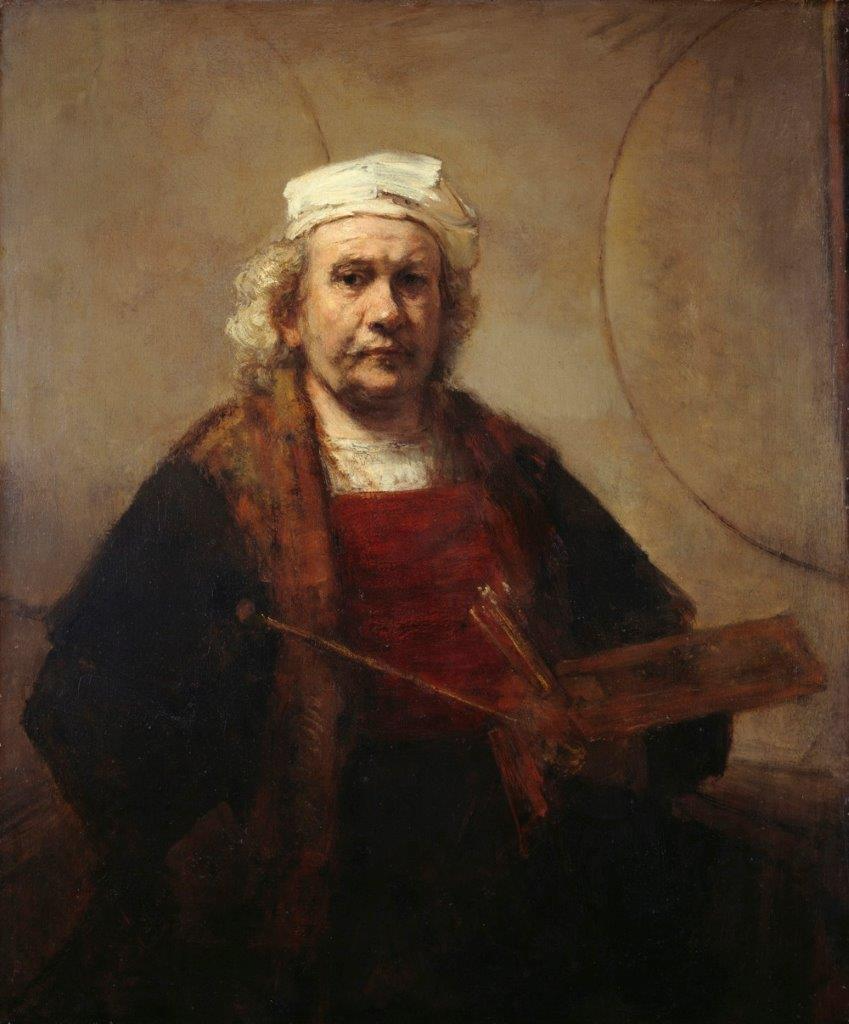
Gary notes that in this portrait Rembrandt paints himself as “artist in the studio”. He wears simple clothes, carries his palette and brushes, and sits in front of a wall with two simple circles painted on it.
When Rembrandt painted this he was out of fashion, bankrupt, and watching his students rise above him in wealth and social stature; students like the fellow below, Ferdinand Bol.
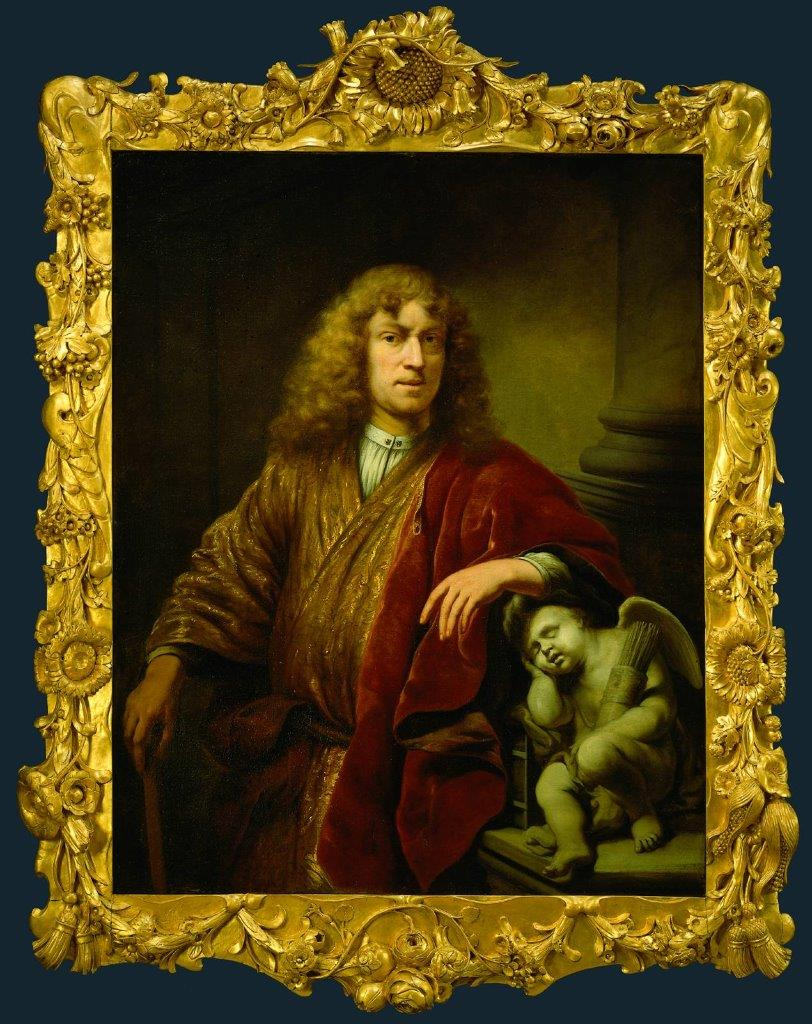
Bol learned his craft from Rembrandt, even teaching the style to students of his own. When he painted this, Bol was more financially successful and socially well-regarded than Rembrandt, and he painted himself like that. Sumptuous fabrics, a pricey statue and a Roman column were the trappings that Bol chose for his self-portrait, portraying himself as “successful man”.
Gary says that Portraiture was big business during the Dutch Golden Age. In an era before advertising and social media, portraits were branding. The wealthy class commissioned portraits to show the world how successful they were.
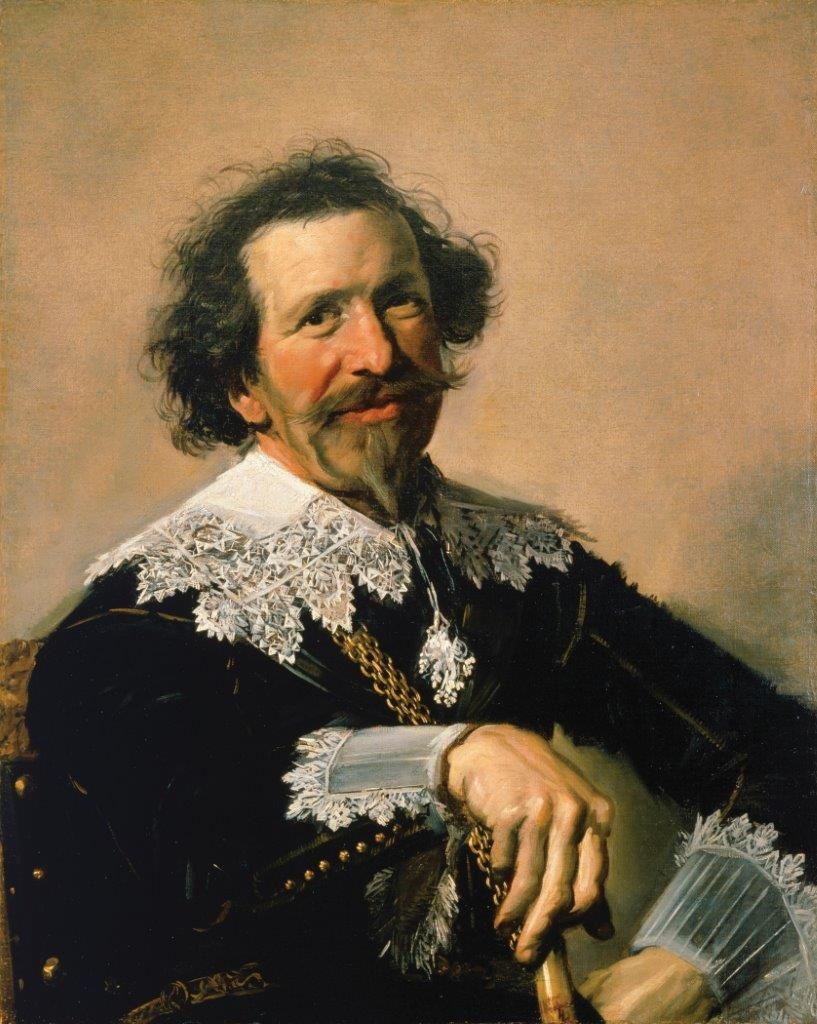
Rembrandt’s contemporary, Frans Hals, painted this portrait of Dutch merchant Pieter van den Broecke. This guy comes across as friendly, and he was in fact a close pal of the artist. But, Gary did research and found that van den Broecke wrangled a nutmeg monopoly for the Dutch in the Banda Islands, killing and enslaving natives. The portrait captured the image van den Broecke wanted, not reality.
So, what message does Rembrandt’s portrait convey? Gary Faigin believes the secret message is in those simple circles.
Like many other art historians, Gary thinks the two circles are a reference to another great painter, Giotto. The Italian painter of the Middle Ages was said to have been able to draw a circle, perfectly, free-hand. By putting those two, simple circles so large behind his head, Gary says that Rembrandt thumbed his nose at the fleeting fashion of the Dutch art scene. Rather than portraying himself as rich or successful, Rembrandt painted himself, quite simply, as a Master. He connected his image to one of the greatest artists of all time, branding himself as bigger and more enduring than his era.
Now, very few of us intend to set our image as Great Masters of Art, but Gary Faigin says there is something we can learn from the way Rembrandt crafted his own “selfie”. It’s something Gary thinks about when he paints his own self-portraits.
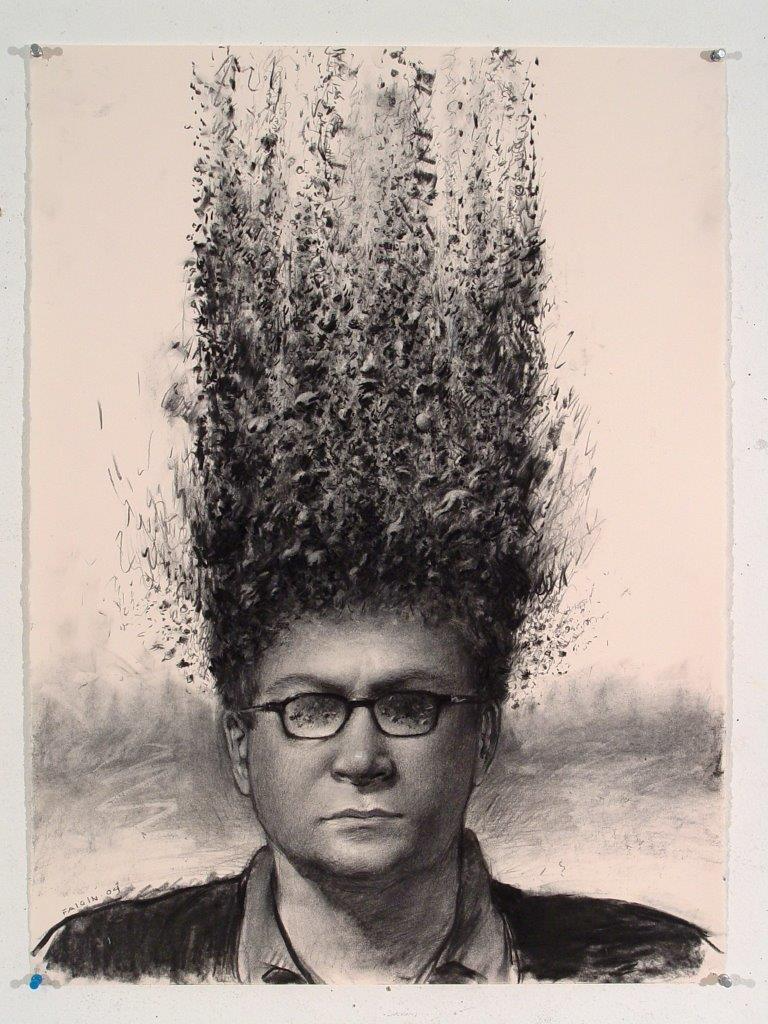
Portraits should do more than just show what you look like, whether you’re fat or thin or beautiful. In fact, portraiture as art has very little to do with what a person looks like. The test of a portrait is what someone will be able to connect with one hundred years from now. It should reveal something about the life of a particular person in a particular place at a particular time.
So, the next time you snap a “selfie” for your profile pic, ask yourself, what am I really saying with this picture?
RELATED EVENT:
Rembrandt’s Self Portrait with Two Circles, and other portraits from The Kenwood House, London, were on display at the Seattle Art Museum through May 19, 2013.